


The current energy transition presents us with a number of practical issues in search of solutions.
Managing the Compute-Energy Coupling
The physical baseline of data processing remains unalterably anchored to Landauer’s Principle. Universal law dictates that changing a single bit of information must inevitably dissipate a minimum threshold of thermal energy:
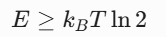
Where k represents the Boltzmann constant and T denotes the absolute temperature of the circuit. While this core physical link cannot be broken, macro-efficiency is pivoting toward software optimizations and architectural overhauls. Think of these as micro fixes and patches.
- Algorithmic Pruning & Quantization: Short-to-medium-term efficiency gains are driven by a shift from raw scaling to specialized model compression. Low-bit quantization (reducing mathematical precision from 16-bit to 4-bit or 2-bit operations) and Sparse Mixture-of-Experts (MoE) architectures, which activate only a specific mathematical fraction of a network per prompt, effectively eliminate 90% of parameters. This yields a tenfold increase in compute capacity per watt. It is a highly logical allocation of resources.
- Alternative Hardware Architectures: True structural decoupling requires bypassing traditional von Neumann architectures. Neuromorphic computing utilizes event-driven, analog-digital pathways that mimic the cognitive architecture of organic brains. Simultaneously, optical (photonic) computing leverages photons rather than electrons to execute matrix multiplications. Because photons pass through mediums without resistance, optical computing eliminates structural Joule heating losses, lowering the power-to-compute ratio to a remarkable degree.
Note to self. Why photons instead of elections: An autocorrelation, a concept in matrix multiplication is computationally analogous to a convolution. A convolution in one domain is multiplication in the Fourier domain. Optics naturally perform Fourier transforms in their interference calculus. Photons are therefore more efficient than electrons at massive volumes of matrix multiplications.
Extraterrestrial Data Centers
Orbital data centers in low Earth orbit have progressed from fiction into actual venture portfolios, capitalizing on unique atmospheric and cosmic advantages. Despite these benefits, orbital clusters will not serve as primary processing hubs for mainstream terrestrial AI demand due to two severe friction points:
- The speed of light dictates a fixed latency floor on routing data from Earth to orbit and back. This structural lag isolates orbital compute to non-latency-critical workloads, such as deep-space communications, localized edge-processing of satellite telemetry, or highly asynchronous batch training of foundational models.
- Terrestrial hardware undergoes an aggressive 3-to-5-year obsolescence cycle. Launching massive capital assets into space, only for the underlying accelerators to become obsolete within 48 months, is economically illogical. Until autonomous in-space robotic servicing and modular chip hot-swapping mature, orbital facilities will remain a highly specialized sovereign niche.
Impact on Other Energy Users
The purchasing power of hyperscalers deeply disruptive to the broader merchant power market. Because data centers demand highly reliable, 24/7 baseload power tech companies are executing massive, long-term PPAs effectively sweeping the premium, zero-carbon baseload assets off the market. This creates a dual penalty for industrial and residential consumers:
- The Intermittency Burden: As corporate buyers lock down stable, clean baseload power, public grids are forced to rely on older, highly volatile, or fossil-heavy generation mixes to balance residential demand peaks. (Note to self: the harmonics of the grid requires active grid management to avoid catastrophic volatility in transmission. Consider the Spanish grid blackout 2025.)
- Capital Cost Socialization: Connecting gigawatt-scale data clusters requires extensive transmission grid upgrades, transformer procurements, and advanced substation construction. Utilities frequently socialize these infrastructure outlays, leaving residential and small-business ratepayers with structurally higher utility bills to subsidize the grid modernization demanded by hyperscale operators.
The Power Generation Forecast: Solar/Wind vs. Nuclear/SMRs
The global energy matrix over the next two decades will settle into a co-dependent relationship between variable renewables and localized nuclear power.
The Near-Term Volume Leaders: Solar, Wind, and Hydro
Solar PV and onshore wind will drive the volume of capacity additions through 2040. They have effectively won the LCOE race, a megawatt-hour of solar paired with utility-scale BESS represents the cheapest form of power generation to date. Hydroelectric power remains a critical regional anchor, but is limited by geography and geopolitical water-rights.
However, variable renewables cannot solve the data center bottleneck independently due to compounding land-use constraints, protracted transmission permitting timelines, and the threat of the dunkelflaute (extended periods of zero wind and solar output). Note to self: refer to grid harmonics above.
Small Modular Reactors (SMRs) and Deep Fission
SMRs represent the ultimate structural power solution for the computational age. By shifting nuclear construction from bespoke, multi-billion-dollar civil engineering projects to factory-standardized, modular assemblies, SMRs significantly shorten construction times and bypass traditional financing bottlenecks.
- SMRs are clearing regulatory hurdles in advanced industrial hubs (including the US, China, and parts of Europe). Mainline commercial installations operating behind-the-meter at major data campus sites are projected to scale meaningfully between 2032 and 2035.
- SMRs are not a direct substitute for solar or wind; they are a complementary resource that commands a significant price premium because they deliver a zero-carbon, non-intermittent baseline, allowing hyperscales to operate their clusters at almost full utilization without relying on the public grid.
Commercial Nuclear Fusion
Nuclear fusion remains a post 2050 possibility. Despite significant VC inflows and technical advances in achieving net energy gain (Q > 1) at core level, translating lab net energy into a grid-synchronized, commercial power plant requires solving signifincat materials-science challenges. These include tritium breeding containment and mitigating neutron-resistant structural blanket degradation. Consequently, fusion will not likely play a measurable role in resolving the current generation of AI driven grid constraints. Finally, there are doubts if terrestrial conditions will ever support a practical fusion reactor.
Mitigating Cognitive Effects and Atrophy
Offloading structural cognitive processing to automated algorithmic systems introduces a profound evolutionary risk to human capability. If unchecked, the species faces intellectual degradation. Mitigating this shift requires intentional institutional interventions across education and healthcare.
Remedial Action in Education
Education systems are undergoing a rapid pendulum swing away from total digital integration and back toward raw cognitive resistance training:
- Curriculums are shifting backward to evaluate the process of thought rather than the artifact of production. This includes a return to closed-book, handwritten examinations, viva voce (oral defense) testing, and real-time, unassisted problem-solving.
- Educational frameworks are beginning to classify AI tools not as baseline infrastructure, but as an advanced cognitive privilege, similar to mastering basic arithmetic long before utilizing a graphing calculator. The focus is moving toward training students in “first-principles synthesis,” forcing the human mind to construct internal semantic models before engaging with an external generative interface.
Therapeutic and Psychological Ecosystems
A specialized vertical within the wellness and clinical psychology sectors is emerging to treat the psychological fallout of automated cognitive displacement:
- Noetic Therapy: Clinical frameworks are being actively developed to address “existential obsolescence”, the profound psychological disorientation individuals experience when their core intellectual or creative skill sets are duplicated by an algorithm.
- Cognitive Rehabilitation and “Digital Fasts”: Similar to physical therapy treating muscular atrophy, cognitive wellness centers are commercializing structured programs to rebuild human focus, long-term memory retention, and deep text synthesis. These programs enforce prolonged periods of high-friction analog processing to restimulate synaptic density and dopamine pathway regulation outside of hyper-optimized digital feedback loops.
The Labor Market: Robustness, Vulnerability, and Derailment
The displacement vector of AI is uniquely inverted compared to past industrial revolutions: it is aggressively attacking the upper-middle tiers of the cognitive labour market before automating dexterous physical labor.
Vulnerable Sectors
The most exposed roles are cognitive-routine positions—jobs that involve moving, synthesizing, or translating information between standardized digital systems:
- Mid-Tier Professional Services: Junior corporate lawyers (due diligence, contract generation), entry-level software developers (routine code generation, debugging), financial analysts (data aggregation, standard market modelling), and traditional corporate middle management.
- Administrative and Creative Production: Content marketing, technical translation, routine graphic design, and basic customer operations.
Robust Sectors
Robustness in the modern labor market is determined by two human-centric attributes: hyper-dexterity in high-entropy physical environments, and high-stakes emotional architecture:
- The Precision Trades: Electrical grid technicians, specialized plumbers, HVAC installers, and specialized construction engineers. The physical world is infinitely chaotic, and building a robotic actuator that can navigate a non-standardized crawlspace safely remains orders of magnitude harder than training a trillion-parameter LLM.
- Acute Human Care: Palliative care physicians, surgical nurses, physical therapists, and early-childhood developmental specialists. These roles depend entirely on the bi-directional transfer of high-fidelity human empathy and trust, which cannot be automated without destroying the efficacy of the service.
- High-Stakes Discretionary Capital Allocators: Senior corporate strategists, trust attorneys, and elite fund managers. When a decision involves systemic risk, shifting regulatory landscape navigation, and deep intuition regarding un-quantifiable black swan risks, capital owners will always demand a human throat to throttle.
Derailing or Altering the Displacement Trajectory
The trajectory of mass labour displacement can be fundamentally altered through structural changes to the employment architecture:
- The Mutual-Assurance Regulatory Model: Governments can enforce a framework where AI cannot act as a direct replacement, but must act as a legal co-pilot. For example, maritime aviation did not eliminate pilots; it changed them into system managers. By mandating that high-stakes outputs (legal briefs, medical diagnoses, architectural blueprints) carry strict, non-delegable human liability, public policy can ensure that humans remain legally anchored to the centre of the production loop.
- Taxing the Electronic Worker: If automation accelerates too rapidly for societal absorption, states may deploy “compute taxes” or “automation levies”—tying corporate tax rates directly to the ratio of human payroll to computational energy consumption, artificially slowing the displacement curve to match human retraining cycles.
Demographic Conflicts: Aging Populations and the AI Safety Valve
The convergence of the Fourth Energy Transition with the global demographic winter (sharply falling fertility rates and rapidly aging populations across developed and transition economies) creates a profound macroeconomic paradox. Far from being a crisis, AI is part of the essential structural solution for an aging civilization.
Support Ratios and Fiscal Dependency
In an economy with a collapsing support ratio (where the number of active workers per retiree drops from 4:1 down to 1.5:1), traditional pension systems and fiscal balance sheets face structural insolvency. AI serves as a powerful productivity multiplier, allowing a shrinking pool of young workers to maintain a massive per-capita GDP output. By automating the administrative and routine cognitive overhead of society, a smaller labor force can generate the tax revenues and economic surplus required to fund the fiscal liabilities of an aging demographic.
Looking After the Old
The labour shortage in eldercare is acute. AI and advanced robotics provide a two-pronged solution:
- Administrative De-burdening: AI can automate up to 40% of the bureaucratic and regulatory paperwork that currently consumes the time of nurses and physicians, structurally returning human caregivers to direct patient-facing bedside care.
- Ambient Health Monitoring: Hyperscale, low-power AI models integrated into living spaces can monitor cognitive decline, detect gait degradation to predict fall risks, and manage complex, multi-drug pharmaceutical regimens without requiring continuous, manual human oversight.
Educating the Young and Putting Them to Work
This is the area of highest tension. While AI can act as the ultimate hyper-personalized tutor, democratizing elite, structured, 1:1 education for every child regardless of background, it threatens to destroy the apprenticeship tier of the economy. Historically, the young entered the workforce by doing the routine, low-level cognitive work (summarizing documents, writing basic scripts, sorting data) under the supervision of seniors.
If AI completely displaces this entry-level tier, the ladder of professional development is broken. The young cannot jump from school directly into senior discretionary roles. The primary structural challenge of public policy will be artificially creating or subsidizing “learning positions” within corporations to ensure the continuous transmission of institutional knowledge.
The Public Policy Playbook for the Transition
Sovereign states will be forced to move away from the laissez-faire digital governance models of the early internet era. The physical realities of power grids clashing with the societal shocks of automated cognition require robust, structural public policy intervention.
Grid Sovereignty and Zoning Regimes
Governments will increasingly treat computational capacity as a critical national resource, tightly bound to energy security:
- Algorithmic Curtailment Laws: Public utility commissions will enact regulations that subject hyperscale data centres to mandatory curtailment clauses during periods of acute grid stress. If a heatwave threatens municipal power stability, data centers will be legally required to down-throttle their non-essential inference or training workloads. Basically, this is conditional priority very much like a capital structure for energy.
- Energy-Pairing Mandates: Zoning approvals for new data campuses will be legally contingent upon “Bring Your Own Power” (BYOP) frameworks. Hyperscalers will not be permitted to plug directly into public grids unless they simultaneously co-locate or finance equivalent, dedicated baseload generation capacity (such as co-developing an adjacent SMR or utility-scale battery storage network).
Sovereign Data Hydrology and Anti-Trust
Just as nations established strategic oil reserves in the 20th century, 21st-century states will establish Sovereign Compute and Data Reserves. To protect against the cognitive flattening driven by foreign commercial monopolies, governments will directly fund and maintain localized, open-source foundational models trained on culturally specific, high-integrity regional datasets. This ensures that domestic legal systems, public education, and state administration are not outsourced to the private server architectures of external corporate sovereigns.
Fiscal Re-Alignment: Shifting from Income to Resource Taxation
As the corporate wage bill shrinks relative to computational output traditional fiscal tax systems which rely overwhelmingly on personal income taxes and payroll contributions will face structural deficits.
By structurally taxing the material and energetic inputs of the algorithm rather than human labour, the state may be able to generate the revenues necessary to fund the social safety nets, retraining programs, and public services of a highly automated, low-entropy civilization.